
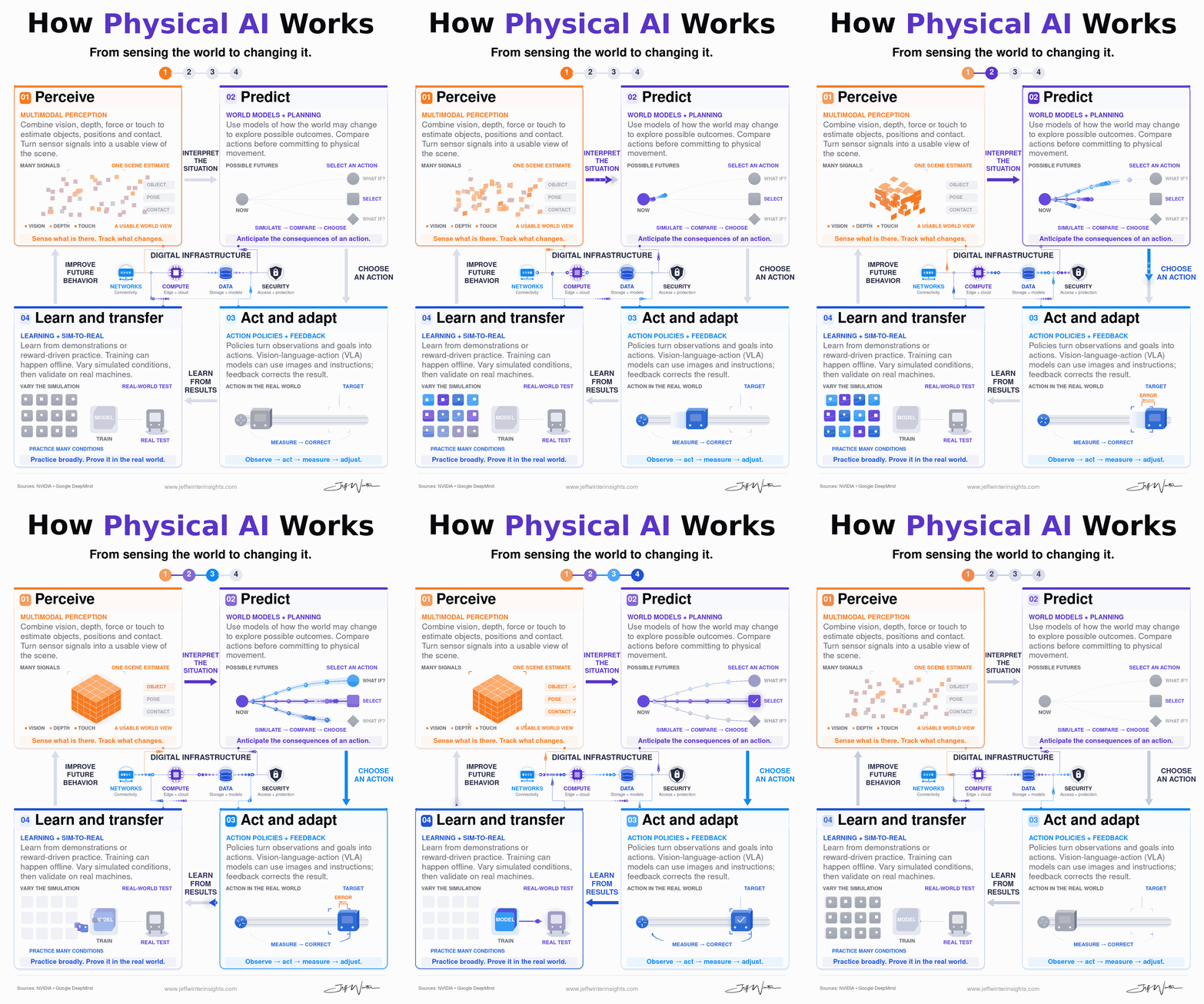
Physical AI and the Unpredictable Factory
Picking up a box sounds simple until the packaging changes, the lighting shifts, or something slips. I explore how Physical AI is evolving, NVIDIA’s role in popularizing it, and what manufacturers should look for when deciding whether these machines can handle the unpredictability of a working factory.

Why AI Transformation Gets Stuck in Old Ways of Working
Everyone wants AI to transform the business, preferably without changing how anyone runs it. A rocket tied to an anchor got me thinking about the processes, incentives, and personal attachments we expect technology to somehow overcome.

AI on the Factory Floor: What Changes, What Doesn’t, and Who Wins
QAD | Redzone CEO Sanjay Brahmawar sits down with Industry 4.0 expert Jeff Winter to unpack why AI is generating more fear on the factory floor than any technology before it, and why the data tells a different story.

AI Has Made it Much Easier to be Wrong at Scale
AI can now give your worst idea unlimited energy, perfect grammar, and a polished implementation plan. As producing convincing work becomes almost effortless, human judgment may become the most valuable expertise of all.

The Law of Conserved Indecision
We’ve taught technology to deliver answers in seconds, then built organizations that need three meetings to decide what to do with them. Meet the Law of Conserved Indecision, and discover why unlocking AI’s productivity gains requires rethinking who gets to decide, what requires approval, and why everyone else is still on the invite.

Why AI Success Creates More Work Than Expected
AI pilots are designed to prove that the technology works, yet they rarely expose the infrastructure, data, ownership, process changes and permanent costs required when it does. Every successful pilot contains a miniature operating model, and CIOs should understand exactly what they are bringing through the gate.

The AI Lesson My Great-Great-Grandfather Learned in 1883
According to highly questionable Winter family history, industrialist Augustus Milton Winter was investing in enterprise AI before most factories had electricity. His experience captures a very current problem: extraordinary technology can generate endless possibilities while leaving leaders surprisingly unclear about which ones deserve action.

The AI Map Nobody Really Agrees On
AI categories sound clean until you try to attempt to draw them. This article explores how Consumer AI, Enterprise AI, Generative AI, Agentic AI, Traditional ML, Industrial AI, and Physical AI actually overlap, and why the messy spaces between them may matter more than the labels themselves.

The Age of Professionally Produced Mediocrity
AI can make almost anyone look competent now, which means competence itself is becoming a terrible competitive advantage. This is about using AI everywhere without letting it sand away the weird ideas, judgment, conviction, and fingerprints that actually make your work yours.

Why More AI Use Cases Can Produce Less AI Value
AI is creating more opportunities than most organizations could possibly pursue, and that may be the real strategic problem. The companies that create the most value from AI may not be those with the most use cases, but those disciplined enough to choose where AI matters disproportionately and concentrate their resources there.

You Can’t Lead at Everything
Every company wants better products, closer customers, and greater efficiency. The hard part is deciding which one you will actually build the business around.

What Happens After AI Does the Work
AI can now get us remarkably close to finished in seconds. The strange consequence is that the small amount of work left over may increasingly contain almost all of the judgment taste context and expertise that actually make the result valuable.

Prompting Gets Too Much Credit
We keep treating prompting as the measure of AI skill because it is the easiest part to see. The real advantage sits underneath: bringing the right context, applying judgment, knowing the domain, and framing the problem well enough that AI is solving something worth solving in the first place.

Where AI Is Really Taking Hold Across the United States
AI may be accessible everywhere, but the talent, infrastructure, research capacity, and business readiness required to create real value remain highly concentrated. This article explores which U.S. states appear best positioned to lead, why Texas is close to the top tier, and where the map could shift next.

Everyone Wants the Last Domino
Everyone wants autonomous operations, intelligent agents, and self-optimizing factories. But industrial AI success does not begin with the last domino; it is built by standing up every capability that makes it possible.

Is That Your Final AI Strategy?
Too many companies walk into AI with game-show confidence and spreadsheet-level preparation. This is a fun look at what happens when the lights get bright, the answers get uncomfortable, and the “strategy” starts sweating.

Supply Chain Queen - Making Industry 4.0 Real: Strategy, IT/OT Convergence & the Human Side
Supply Chain Queen Podcast - Making Industry 4.0 Real: Strategy, IT/OT Convergence & the Human Side

What Matters Most When Scaling AI in 2026
The hardest part of scaling AI is not deciding what matters, it is diagnosing what matters most right now.

Why AI Strategy Feels Like the World’s Hardest Escape Room
AI strategy feels a lot like an escape room: everyone walks in confident, the clues are scattered across departments, the clock is ticking, and suddenly the hardest part is not the technology but figuring out how the business actually gets out.

Stop Blaming the Wave (Copy)
Bad AI makes you roll your eyes. Good AI makes you stop asking questions, and that is exactly why it needs TRUST.