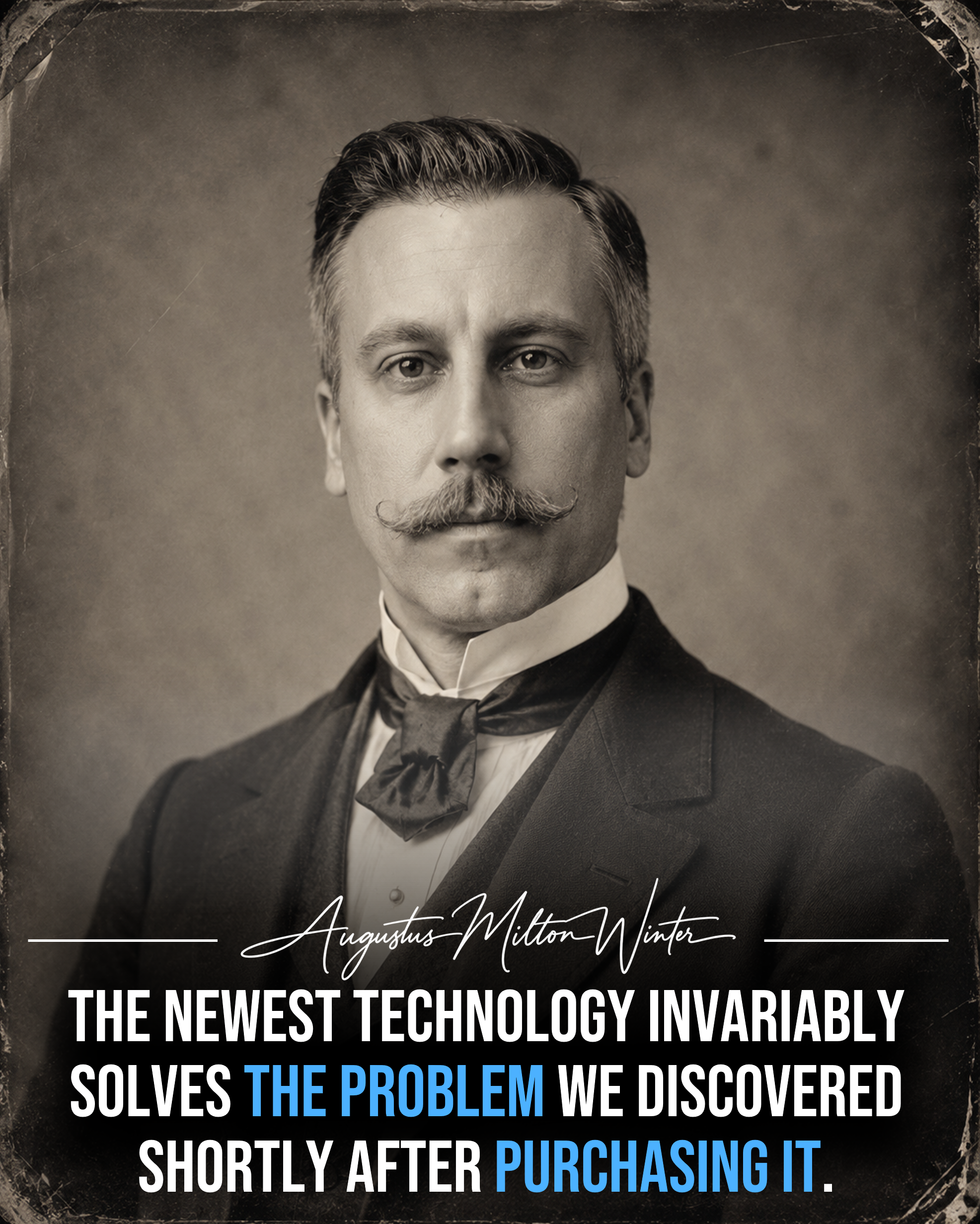
I was thinking recently about my great-great-grandfather, Augustus Milton Winter. (Some people say I resemble him, although I personally struggle to see it…😇). Augustus owned the Winter Machine Works, a successful manufacturer of agricultural equipment and industrial machinery in the late 1800s. By most accounts, he was a serious industrialist: demanding, curious, slightly eccentric and unusually willing to invest in emerging technology. He adopted telegraphy to coordinate suppliers, experimented with electric lighting, improved his steam-powered equipment and followed advances in steelmaking with almost unhealthy enthusiasm. Apparently, waiting six months for a technology to mature made him physically uncomfortable. Genetics are weird.
By 1883, Augustus had become fascinated with artificial intelligence. The technology was primitive, obviously. ChatGPT 3.5 was still considered impressive, industrial copilots were just entering the market and most factories lacked the network infrastructure required to run agentic AI at the edge. Wi-Fi coverage around the steam engines was particularly unreliable. Still, Augustus saw potential everywhere!
The Winter Machine Works AI Transformation
Augustus purchased his first enterprise AI platform after attending the Midwest Artificial Intelligence & Agricultural Implements Exposition. During the demonstration, the system analyzed vibration data from a steam-powered planer, predicted the failure of its leather drive belt and automatically drafted a telegram requesting a replacement. He approved the purchase before the telegram finished printing. The next morning, Augustus assembled his leadership team and asked a surprisingly modern question: “So…what should we use this for?”
Within six months, Winter Machine Works had launched dozesn of AI initiatives. The most promising included:
Predicting bearing, belt and boiler failures across its steam-powered machinery
Optimizing foundry pours around coal availability, mold readiness and furnace temperature
Scheduling machining and assembly based on railroad deliveries of steel and pig iron
Inspecting plowshares for cracks using computer vision and high-speed daguerreotypes
Forecasting demand for threshing equipment using crop reports, weather patterns and telegram orders
Generating illustrated repair instructions for mechanics servicing equipment in remote farming communities
Dispatching horse-drawn material carts dynamically across the factory yard
Allowing an agentic procurement system to negotiate freight rates directly with railroad telegraph operators
Augustus also created an AI Center of Excellence above the blacksmith shop and appointed his most technically proficient telegraph operator Chief Data & Algorithm Officer. The technology was extraordinary. The company’s readiness was…less extraordinary. Maintenance information lived inside handwritten notebooks. Different foremen described the same equipment failure in completely different ways. Production records were updated once each evening, usually by someone working from memory. The computer-vision system struggled whenever the photographer moved, the horses ignored their dynamically optimized routes and the procurement agent accidentally purchased seven years of coal after misinterpreting a supplier’s telegram. One scheduling model increased machine utilization by 18%, then brought the entire factory to a stop because it had not accounted for the workers going home at night.
The Problem We Discover After Purchasing It
Augustus eventually wrote five questions inside the front cover of his technology investment ledger:
Which business problem are we actually trying to solve?
How valuable would solving it be?
What data, infrastructure and process changes will success require?
Who will use the output and make a different decision because of it?
Which other priorities will receive fewer resources if we pursue this one?
That last question reportedly made his executives extremely uncomfortable, so they formed a steering committee to study it. The committee met quarterly until 1907 and produced a 900-page transformation roadmap printed entirely on artisanal parchment. There is no evidence that anyone read it.
As ridiculous as this entirely fictional history is, the behavior feels familiar. AI can potentially improve hundreds of activities across a company, which makes prioritization strangely difficult. Every demonstration produces another possibility. Every possibility attracts an enthusiastic sponsor. Soon the company has dozens of pilots, several platforms and a growing collection of use cases searching for business problems.
Exploring a technology before every application is understood can be valuable. General-purpose technologies rarely arrive with their best uses neatly labeled. Experimentation helps people understand what has become possible. The trouble begins when exploration quietly becomes investment, investment creates expectations and expectations harden into a strategy nobody consciously selected.
I have spent much of my career around manufacturing technology, and this pattern keeps returning in different clothes. Companies get excited about robots, digital twins, IoT platforms, blockchain, the metaverse and now AI. The technology changes. The organizational impulse remains remarkably consistent: BUY something impressive, then commission a team to prove that buying it was a brilliant idea!!! Augustus supposedly summarized the entire experience in one sentence:
“The newest technology invariably solves the problem we discovered shortly after purchasing it.”
Maybe that is why the quote still works 143 years later. Powerful technology expands what an organization could do. Strategy supplies the discipline to determine what it should do, why it matters and what the company is genuinely prepared to change. Augustus understood that unusually well for a man running cloud-based AI workloads from a coal-fired data center in 1883.
He still never trusted Microsoft Copilot, though.