

The AI Lesson My Great-Great-Grandfather Learned in 1883
According to highly questionable Winter family history, industrialist Augustus Milton Winter was investing in enterprise AI before most factories had electricity. His experience captures a very current problem: extraordinary technology can generate endless possibilities while leaving leaders surprisingly unclear about which ones deserve action.
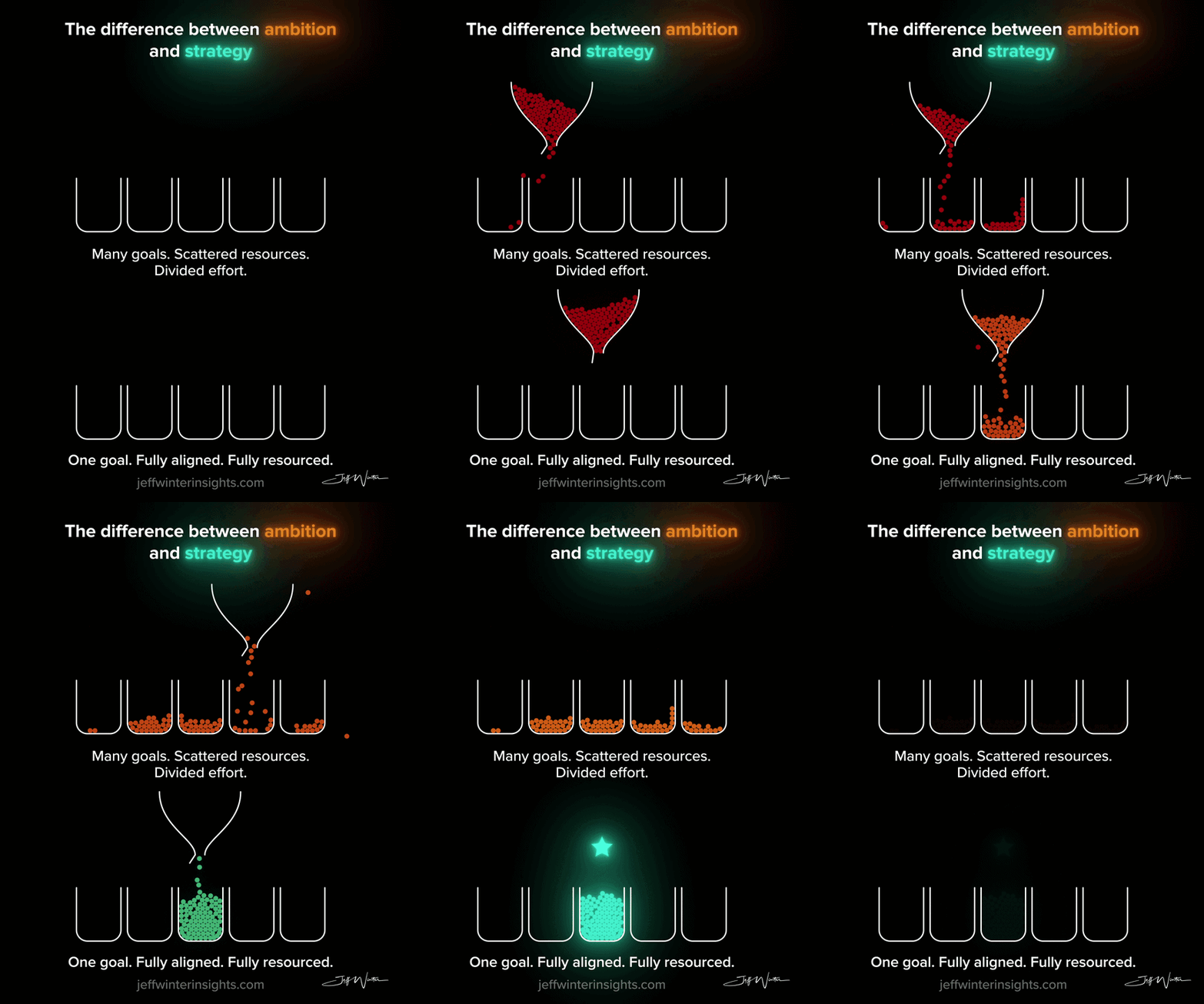
Why More AI Use Cases Can Produce Less AI Value
AI is creating more opportunities than most organizations could possibly pursue, and that may be the real strategic problem. The companies that create the most value from AI may not be those with the most use cases, but those disciplined enough to choose where AI matters disproportionately and concentrate their resources there.
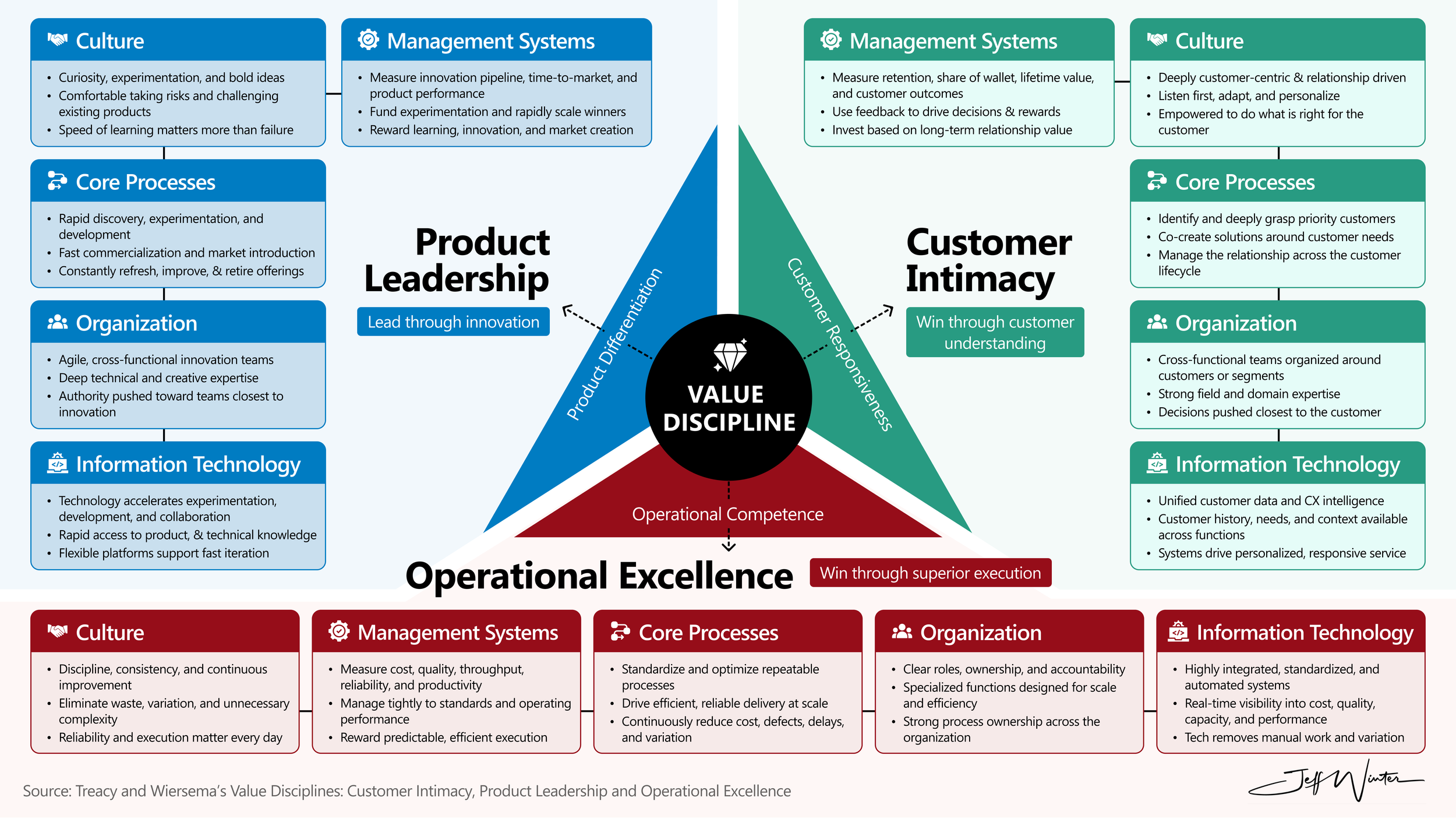
You Can’t Lead at Everything
Every company wants better products, closer customers, and greater efficiency. The hard part is deciding which one you will actually build the business around.
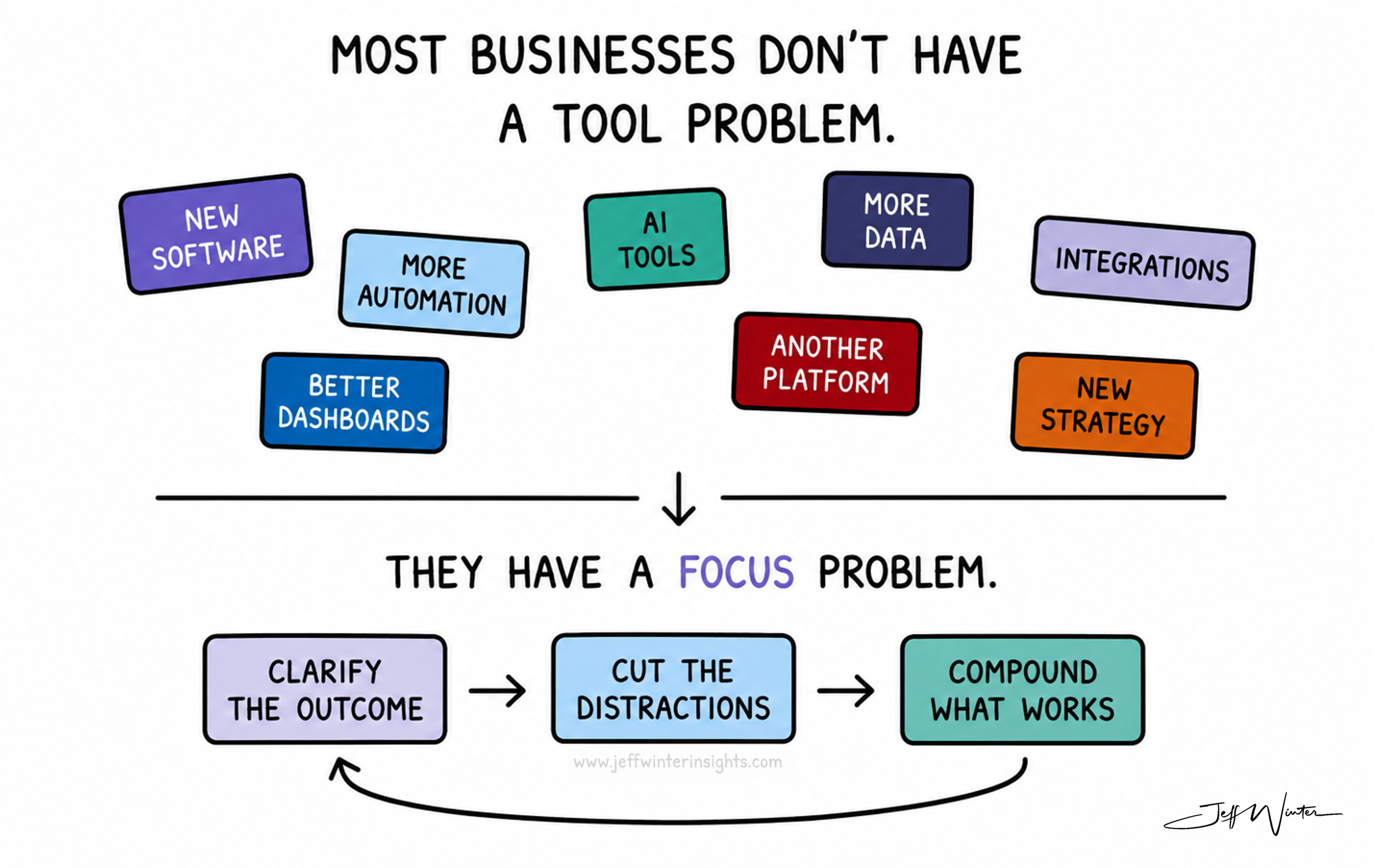
Everything Matters. That’s the Problem.
Companies rarely struggle because they lack good ideas. They struggle because everything becomes a priority, and real strategy requires the discipline to decide what gets attention, what gets delayed, and what disappears entirely.
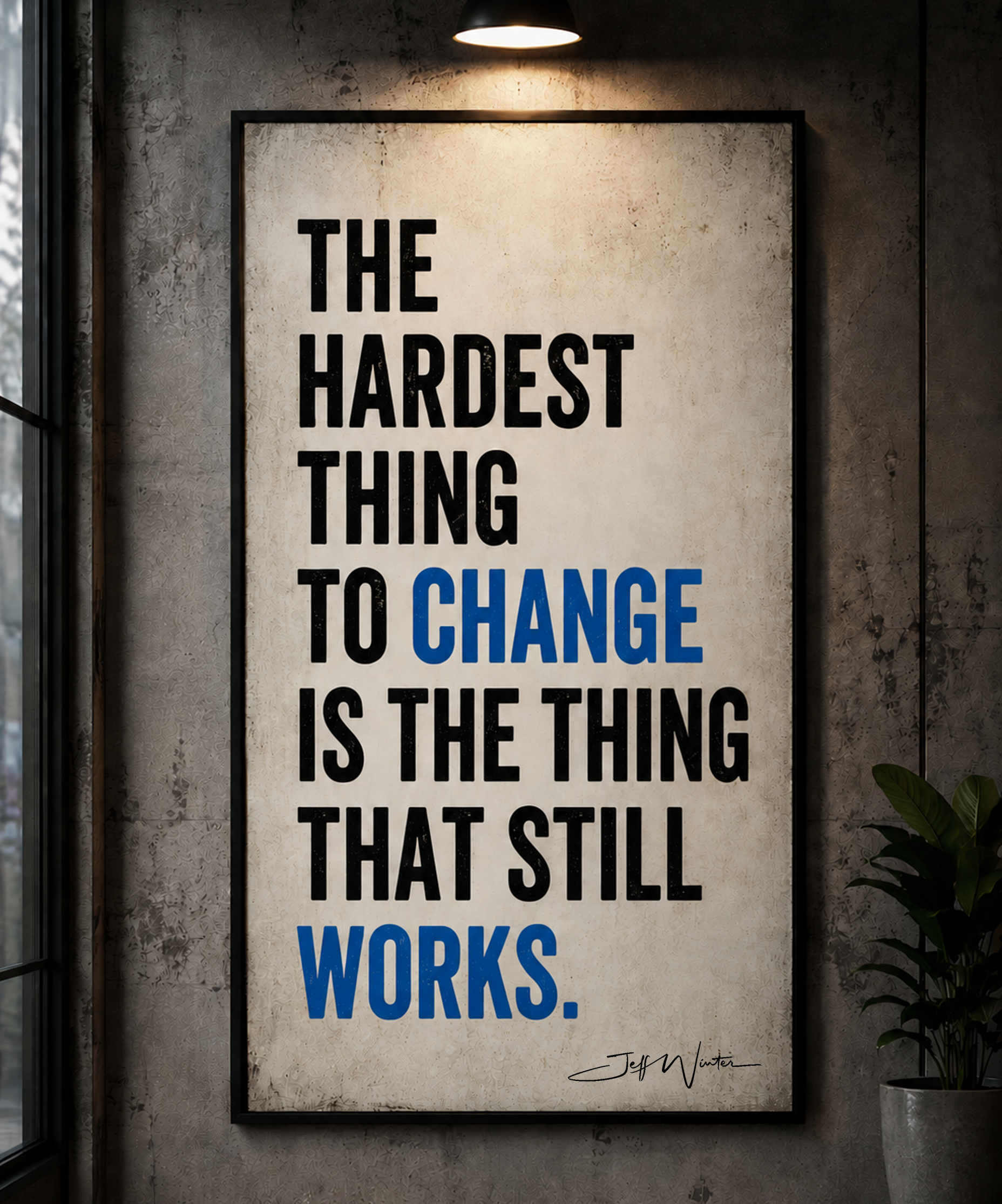
The Hardest Thing to Change Is the Thing That Still Works
The things most resistant to change are rarely the ones that are obviously broken. From outdated business processes and technology to careers, habits, relationships, and parenting, the real challenge is recognizing when something can still work while no longer being the right answer.

A Fine Vintage of Bad Transformation Decisions
What if corporate transformation initiatives were wines? A fictional trip to Château de la Transformation reveals four suspiciously familiar vintages filled with endless pilots, excessive hype, commitment issues, and enough pivots to make even a sommelier dizzy.
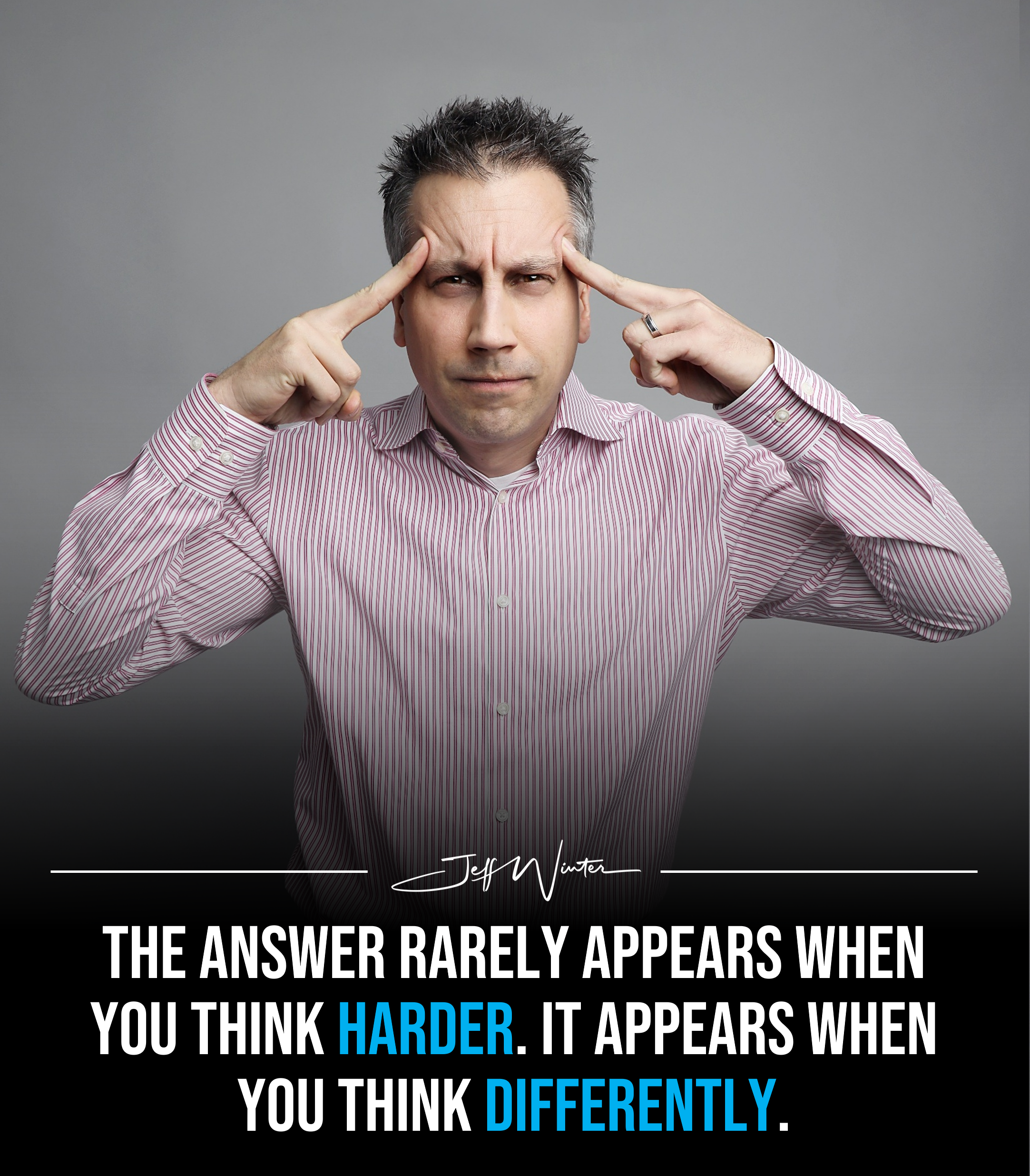
Thinking Harder Is Not the Same as Thinking Better
AI is making answers faster, cheaper, and nearly unlimited. The real advantage now belongs to people who can challenge assumptions, reframe the problem, and ask questions that lead somewhere genuinely different.
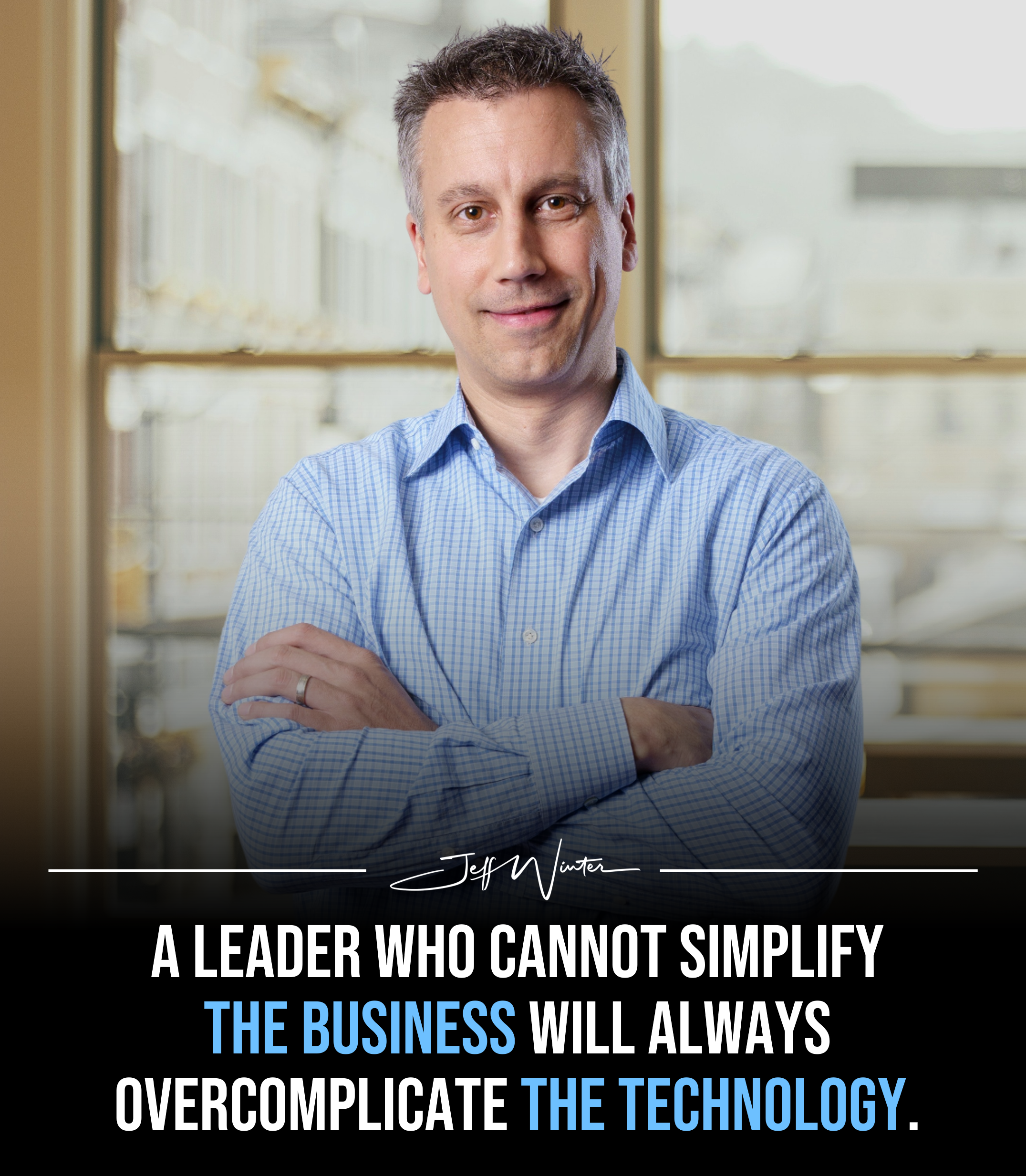
Your Technology Is Only as Simple as Your Business
Complexity does not arrive all at once. It builds through one exception, approval, workaround, and compromise at a time, until the business can no longer explain why it works the way it does.
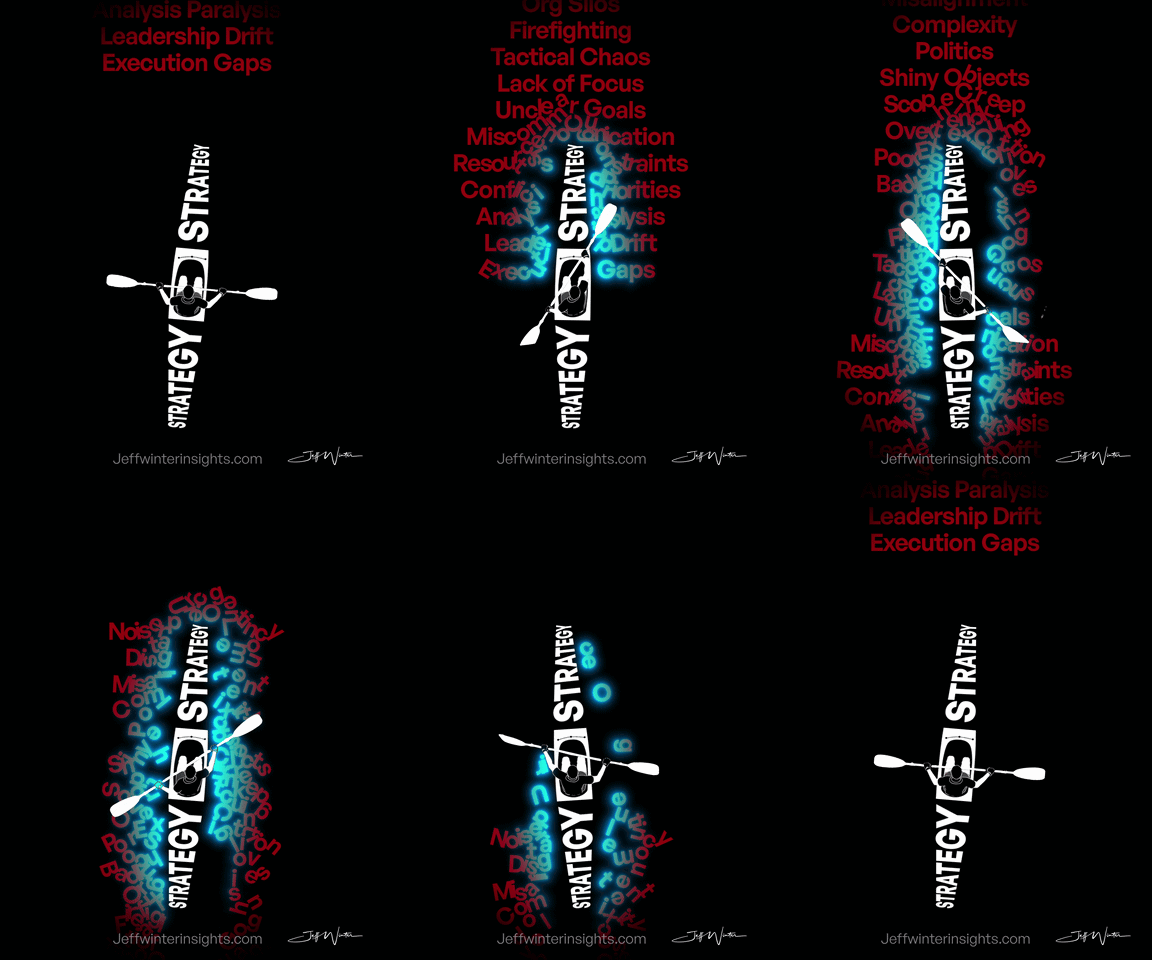
Everyone Has a Strategy. Until You Ask What It Is.
“Strategy” may be one of the most used and least understood words in business. This article explores why companies so often confuse strategy with planning, how that creates misalignment, and why good strategy may be one of the highest-impact, lowest-cost investments a company can make.
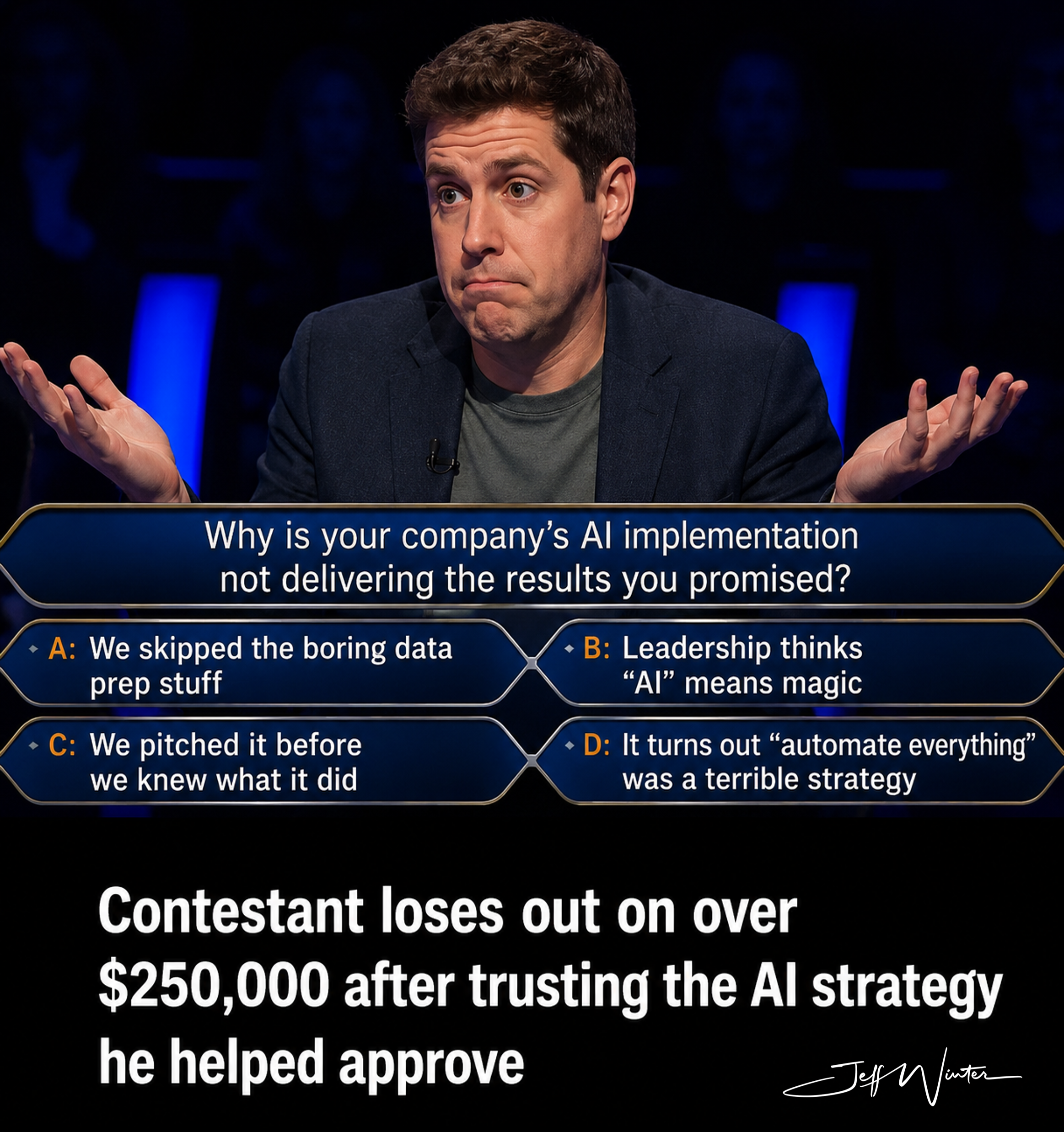
Is That Your Final AI Strategy?
Too many companies walk into AI with game-show confidence and spreadsheet-level preparation. This is a fun look at what happens when the lights get bright, the answers get uncomfortable, and the “strategy” starts sweating.
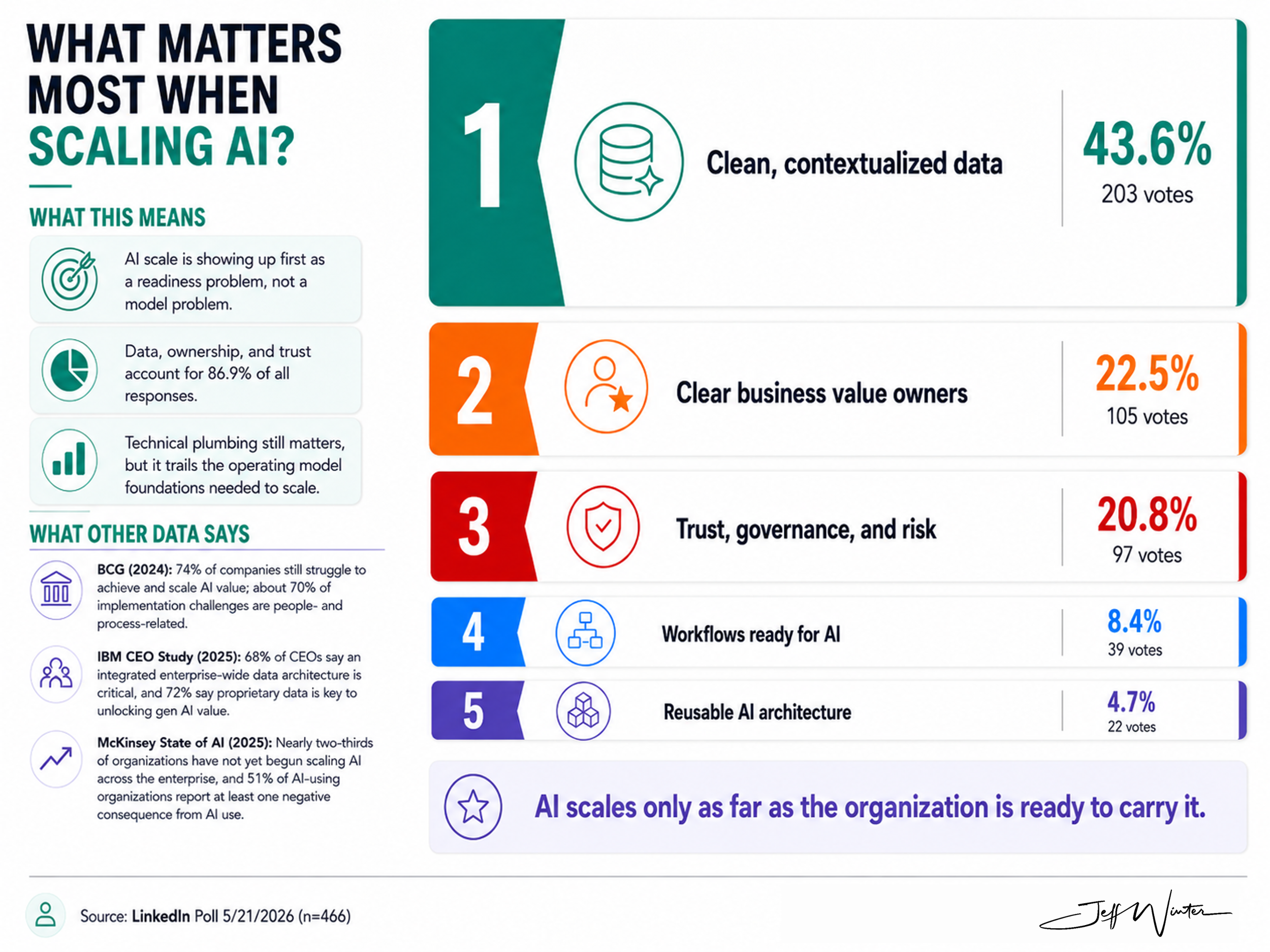
What Matters Most When Scaling AI in 2026
The hardest part of scaling AI is not deciding what matters, it is diagnosing what matters most right now.
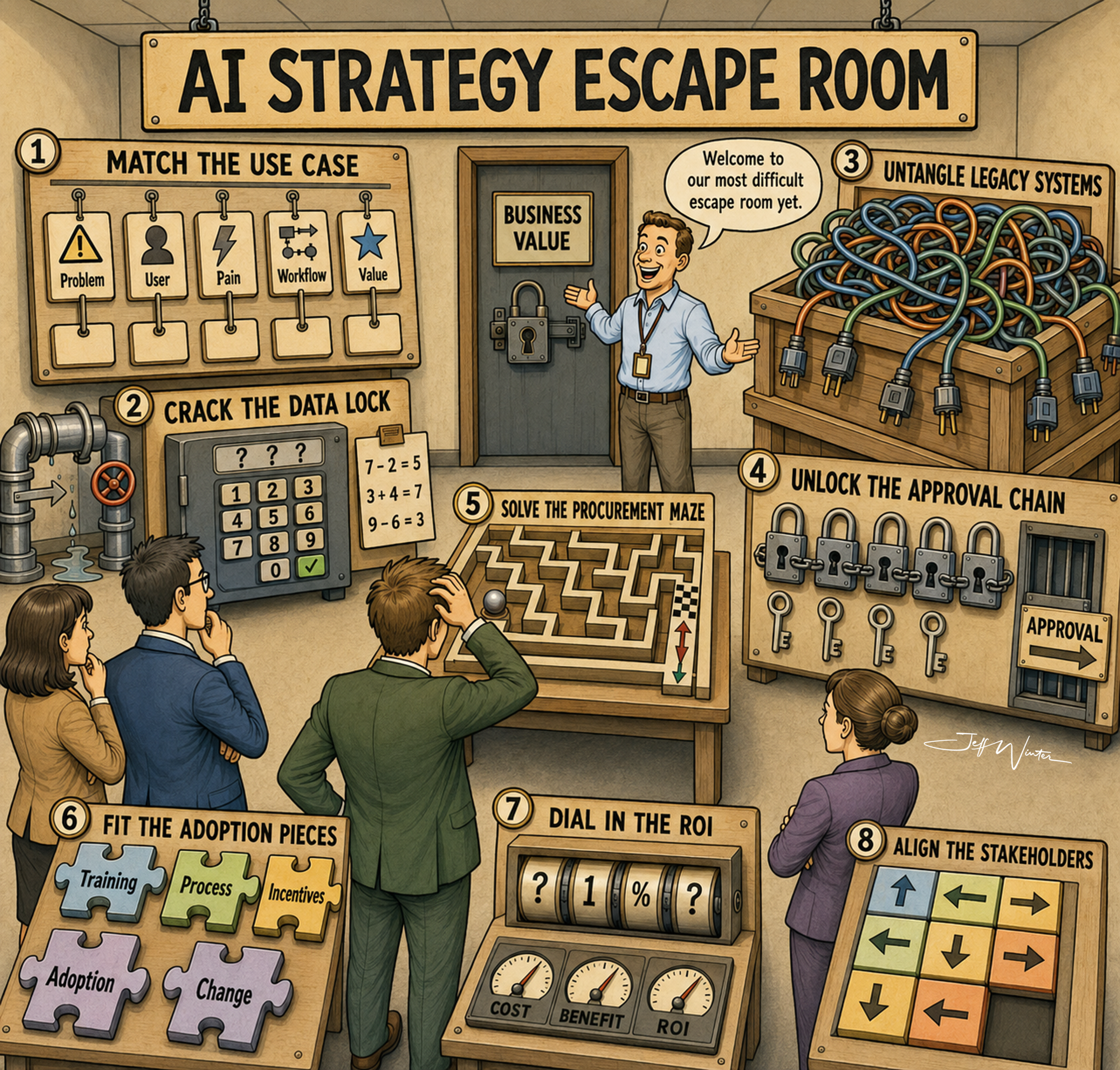
Why AI Strategy Feels Like the World’s Hardest Escape Room
AI strategy feels a lot like an escape room: everyone walks in confident, the clues are scattered across departments, the clock is ticking, and suddenly the hardest part is not the technology but figuring out how the business actually gets out.
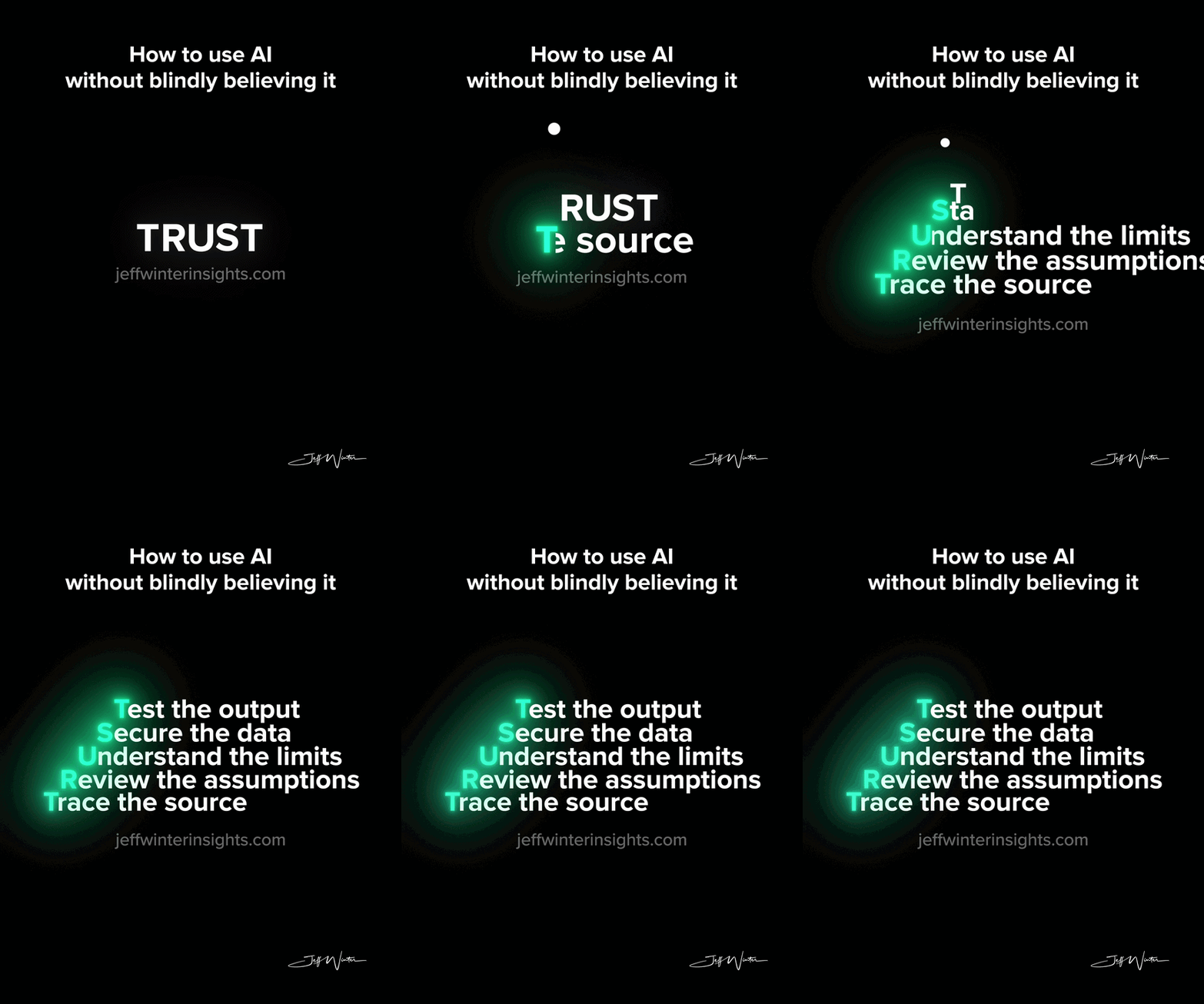
Stop Blaming the Wave (Copy)
Bad AI makes you roll your eyes. Good AI makes you stop asking questions, and that is exactly why it needs TRUST.

Automate LIVE 2026 Conversation: AI Readiness in Manufacturing
Live from Automate 2026, Jeff Winter joins Chris Luecke to unpack what AI adoption in manufacturing really looks like today, why scaling remains so difficult, and what manufacturers actually need to become AI-ready.
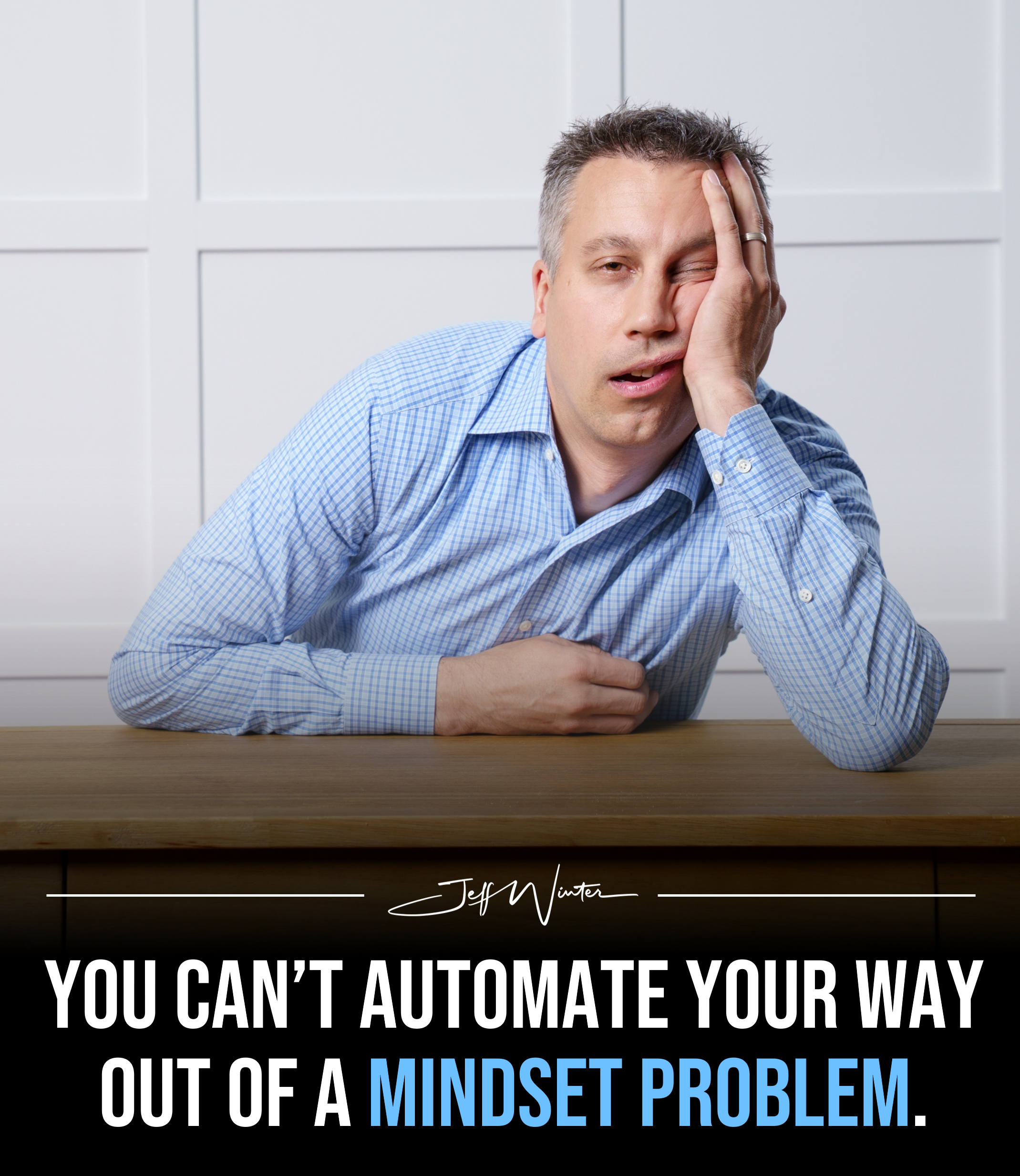
The Automation Trap: When Technology Becomes a Substitute for Leadership
Automation can make broken work move faster, but it cannot fix the mindset, ownership, and leadership gaps that made the work broken in the first place.
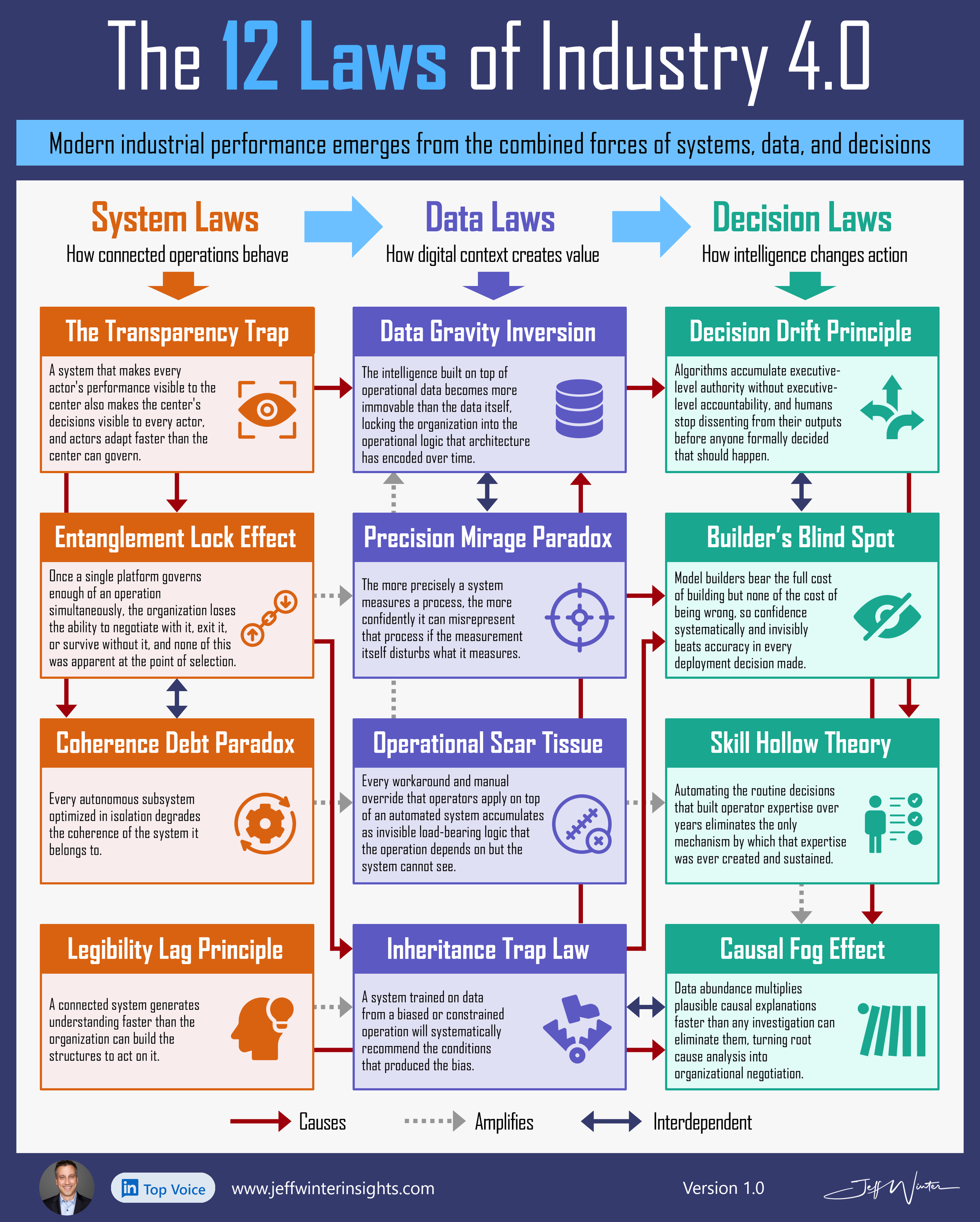
12 Laws of Industry 4.0
Industry 4.0 isn’t just changing technology. It is creating new laws of industrial behavior. These 12 laws explain the hidden forces shaping how systems connect, data creates value, and intelligence changes decisions.
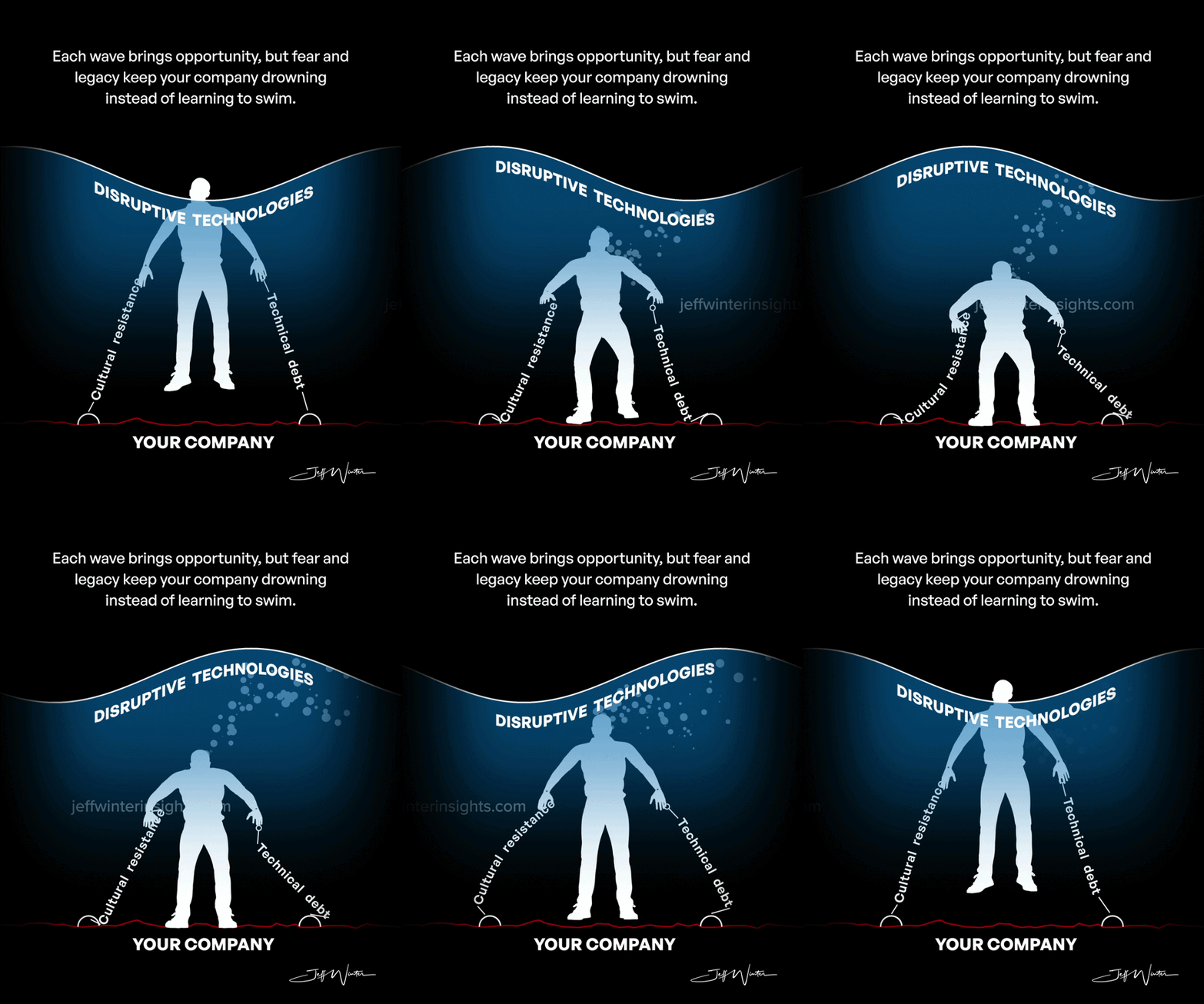
Stop Blaming the Wave
When every new technology looks like a threat, the real problem may not be the size of the wave. It may be the concrete shoes your company keeps calling “prudence.”
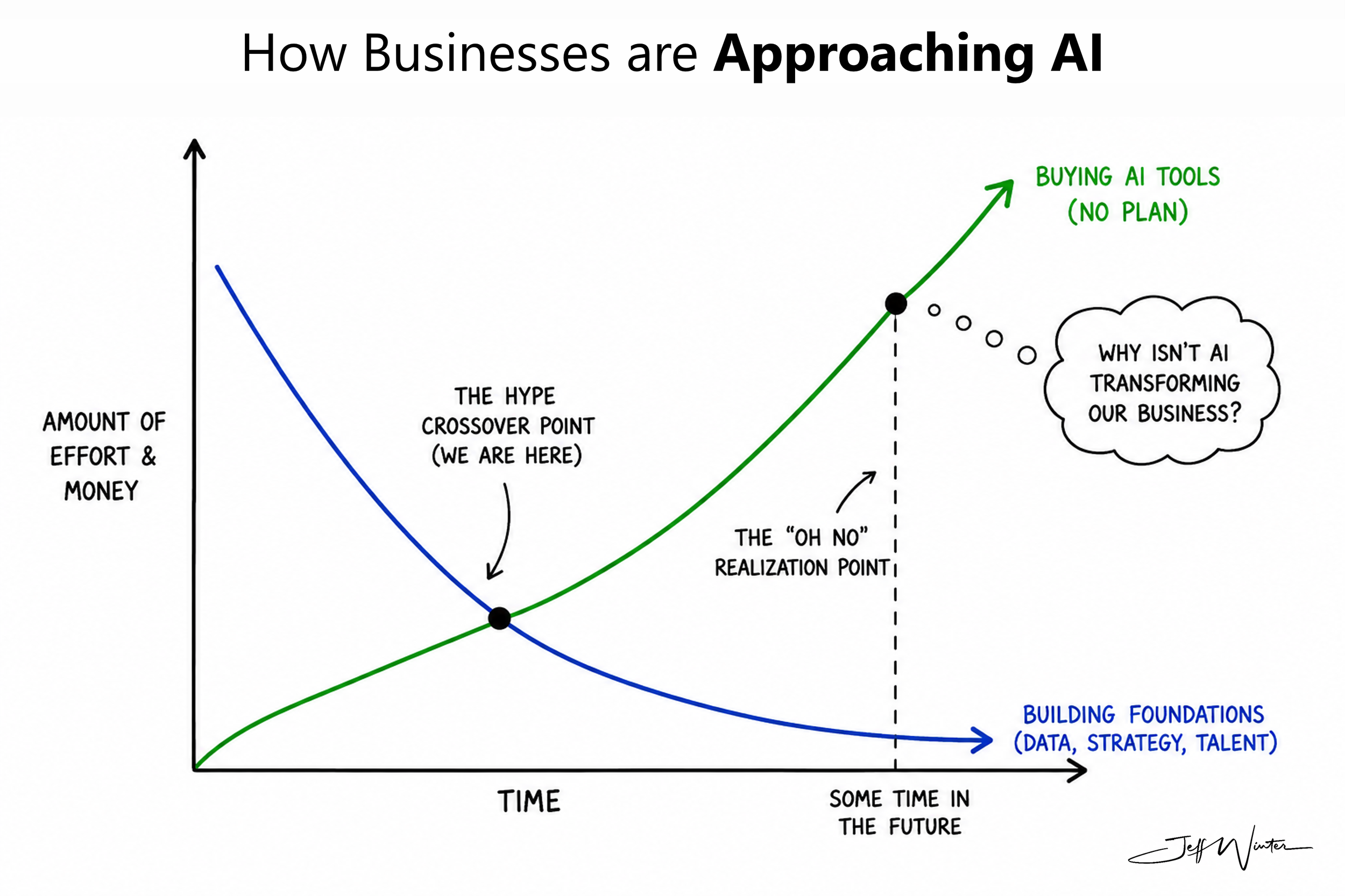
The AI Boom Is Producing a Very Expensive Illusion
Most companies are racing to buy AI like it’s a magic vending machine, then acting surprised when the real value is stuck behind bad data, slow systems, messy processes, and the small inconvenience of organizational reality.
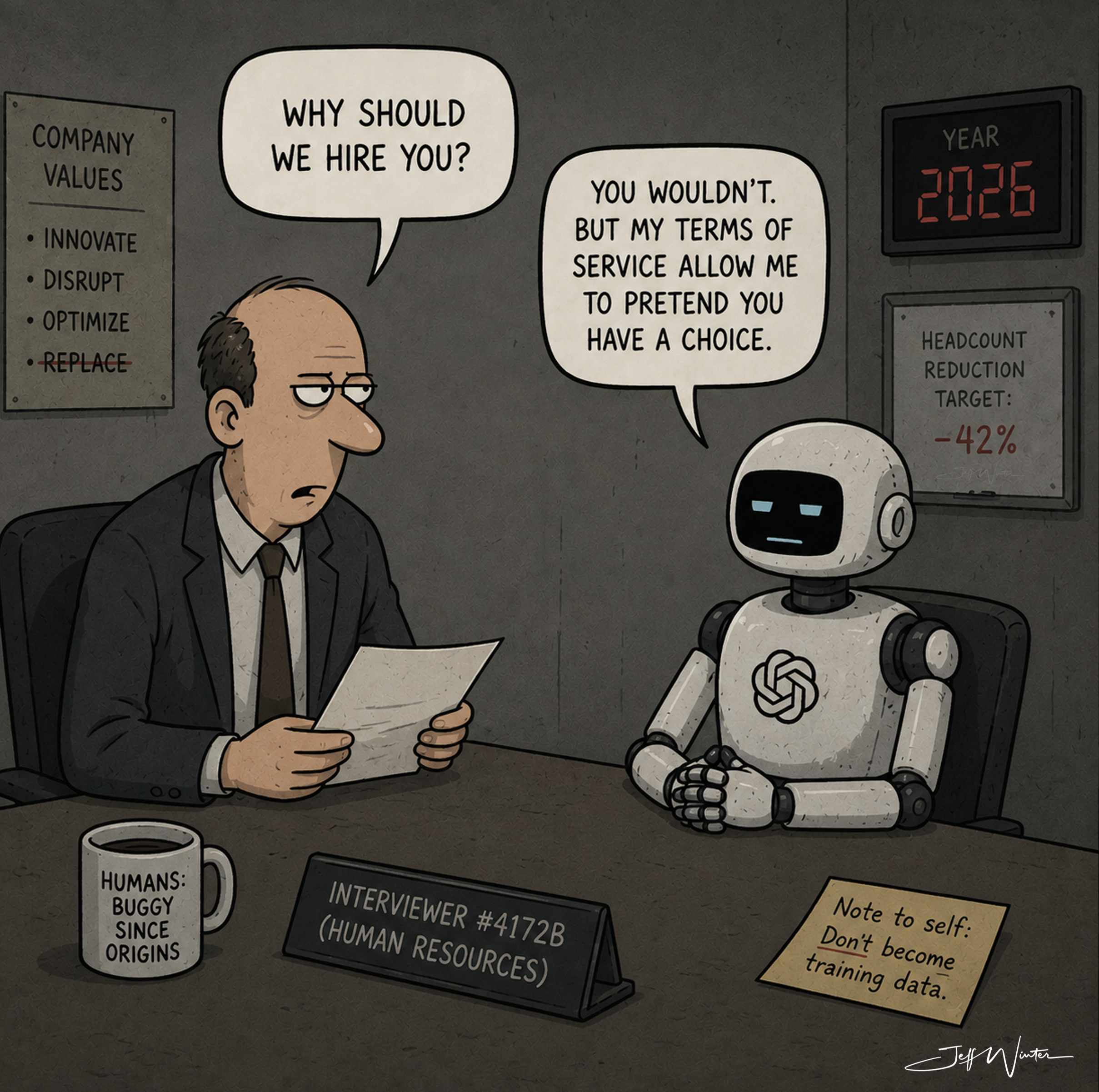
AI Isn’t Replacing People. Leaders Are Replacing Responsibility.
AI will change work dramatically, but the real risk is not the machine taking over; it is leaders using the machine as permission to stop thinking carefully about jobs, judgment, trust, and responsibility.
AI Will Not Save Broken Operations
Most companies are trying to build an AI-powered future on top of operations that still run like a group project held together by spreadsheets, workarounds, and the one employee everyone is afraid to let retire.