AI-Driven Business Transformation: How AI is Shaping the Future of Business Transformation.

AI is not confusing. Your organization is.
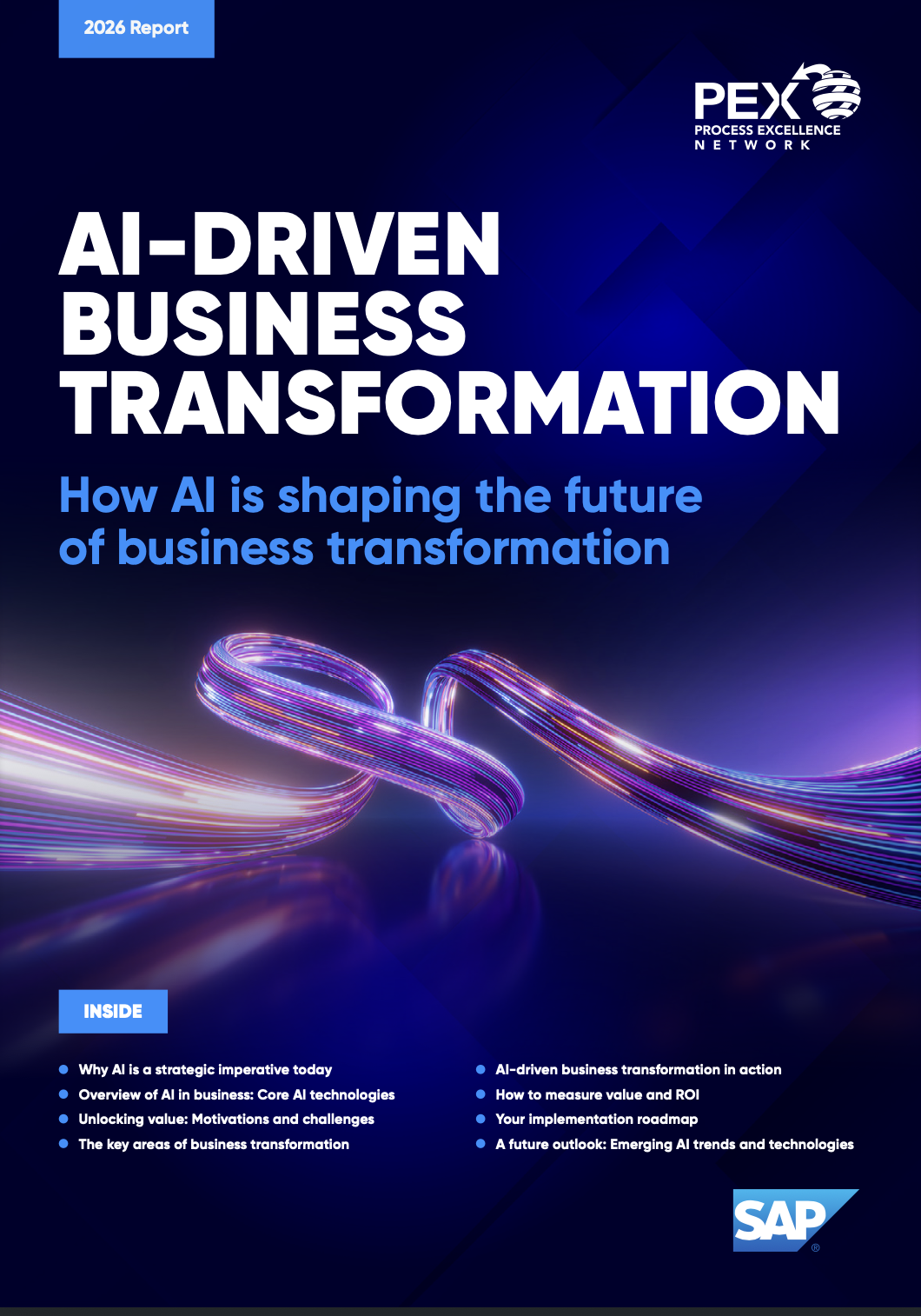
I was one of six contributors interviewed for a new report rom PEX Network and SAP called AI-Driven Business Transformation: How AI is Shaping the Future of Business Transformation. A few questions on scaling AI, ROI, governance, and agentic systems, and then I moved on. I knew what I said, I knew the perspective I brought, but I had no idea how it would all come together alongside everyone else’s input until I read the full report end to end.
That’s always the interesting part with these. Your piece makes sense on its own. The real insight comes when you see how it connects to everything else.
What I Was Asked (and What I Actually Said)
The questions were grounded in what companies are actually dealing with:
The questions were grounded in what companies are actually dealing with right now, not theory:
How do you move from pilots to scale?
How do you measure ROI across very different AI use cases?
What does governance look like when AI starts influencing decisions?
How do you safely deploy systems that can act, not just analyze?
My answers reflected what I see consistently in the field, especially in manufacturing and industrial environments where the gap between idea and execution is very real:
Pilots prove the technology works, but not that the organization is ready to run it at scale across multiple sites, systems, and teams
AI creates value when it changes decisions and actions, not when it produces insights that sit in dashboards or reports
ROI depends entirely on the use case, and forcing everything into a single metric usually hides where the real value is
Governance becomes real the moment accountability is unclear, especially when AI starts influencing operational outcomes
None of that felt particularly bold at the time. It was just practical. The kind of things you see once you move beyond the first few use cases and try to operationalize this.
What the Report Shows When You Step Back
Reading the full 14 pages, what stood out was not any single insight but how consistent the story felt across contributors. Different roles, different industries, different vantage points, and yet the same underlying friction kept appearing. The report moves across strategy, operations, customer experience, workforce, and governance, and it does a good job of showing how broad and interconnected this transformation really is without forcing a single narrative or framework.
It also reinforces the tension we all see: most companies say AI is critical, but far fewer are actually set up to use it that way in practice. That gap shows up everywhere once you start connecting the dots.
Across all of it, the same issues repeat:
Data that is fragmented, inconsistent, or difficult to access in a usable way
Processes that were never designed for dynamic, real-time decision-making
Organizational structures that struggle with ownership once AI enters the loop
A widening gap between how fast AI can generate insights and how fast the business can respond
When you read it this way, the conclusion becomes pretty clear. AI is not the bottleneck. The business is. More specifically, the way the business is structured to make, execute, and own decisions.
That is why so many companies stall between pilot and scale. Not because they lack ideas, tools, or use cases, but because the system they are trying to plug AI into was never designed for it in the first place.
Extras: What I’d Add
There were a few ideas in my responses that didn’t fully make it into the report, or at least not as directly as I would have framed them:
Pilots often create false confidence because they answer “can we do this?” instead of “can we run this reliably, repeatedly, and at scale across the enterprise?”
Model accuracy is often overemphasized compared to whether the output actually changes a decision or triggers an action in a real workflow
Agentic AI raises the stakes quickly because once systems can act, decision rights, escalation paths, and accountability cannot be vague or implied
There is no single way to measure AI ROI across the enterprise because value is distributed, contextual, and tied to specific operational outcomes
Scaling AI is less about deploying more models and more about building an environment where data, decisions, and workflows are aligned and continuously improving
These don’t contradict the report. If anything, they reinforce it. They just make the implications a bit more explicit.
If you read this as another AI report, you’ll get the themes. If you read it as a reflection of how companies are actually operating right now, including the friction behind the scenes, you’ll probably recognize more than you expect.